
Why Film Photography Still Matters in a Digital World
Film Experience Shapes Digital Mastery
In today’s fast-paced world of digital imaging, you might wonder: why does old-school film exposure still matter? What value can years of film photography bring to a digital shooter today? Let’s explore.
Photographers once had favorite film stocks, chosen with purpose. Each brand and type gave a specific look. Some films enhanced skin tones beautifully. Others handled shadows or highlights in ways that digital sensors still strive to replicate.
Lighting and Lens Control Was an Artform
Using powerful strobes gave photographers more than light—it gave them creative freedom. They could control flash power to suit each shot. This meant having full control over aperture settings for depth, motion, or softness.
Shooting action like a liquid pour? Easy with strobes. Want everything razor sharp, front to back? Stop down your lens to f/64 or even f/128. It was called “burying the lens,” and it delivered stunning depth.
Film Gave You Real Choices
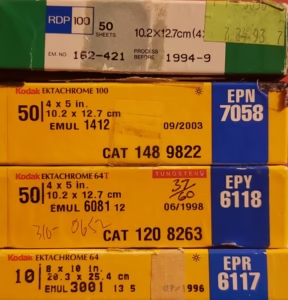
Back then, film options were abundant. Photographers could pick from a wide palette of color stocks. Today, those options are limited. According to B&H Photo, only five color sheet films are available now, compared to 29 black-and-white ones.
The richness of creative control through film was unmatched. Each choice had a purpose. Now, digital presets mimic what used to be done with a film swap.
The Ritual of Loading Film
There was something sacred about the darkroom. Loading 40 film holders—each with two sheets—was a daily ritual. Complete darkness. No shortcuts. Your hands became your eyes. Photographers learned precision through practice, not automation.
This tactile experience built discipline. You couldn’t afford mistakes. Every sheet counted. And that discipline carries into digital shooting today—where, despite endless storage, the best photographers still shoot with intention.
Film Budgets Taught Project Discipline
Before launching a studio, I worked under top-tier commercial photographers. They taught me more than lighting—they showed how to manage projects, timelines, and film budgets.
Back then, the biggest line items weren’t retouching or editing. They were film, Polaroids, and processing. Every shot cost real money. That created a mindset of efficiency. You shot what mattered. You delivered on budget.
Today, digital retouching and conversion time are the new budget challenges. But the mindset? It’s the same—make every click count.
Why This All Still Matters
Shooting film wasn’t just about capturing images. It taught awareness, preparation, and respect for the craft. You couldn’t fix it later. You had to get it right in-camera. That mindset gives digital photographers an edge today.
Digital tools are powerful, but discipline and vision still win. And that’s the biggest lesson from years of exposing film—you learn to slow down, focus, and shoot with intent.
Conclusion: Film May Fade, but the Lessons Endure
Though most film types are gone, the knowledge lives on. The hands-on, eyes-off discipline of film still shapes the best digital work today. Whether you’re editing in Lightroom or capturing a fast pour with strobes, the foundation remains the same.
Respect the process. Master your tools. And always shoot with purpose.